
How Does Genicular Artery Embolization Provide Knee Pain Relief?
What Is Genicular Artery Embolization?
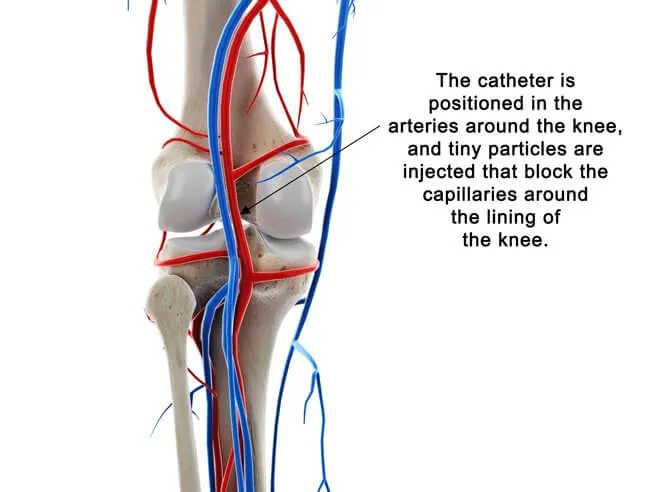
Genicular Artery Embolization, also known as geniculate artery embolization or GAE, is a minimally-invasive procedure used to reduce chronic knee pain, especially in patients suffering from osteoarthritis (OA). The procedure targets small arteries surrounding the knee, known as genicular arteries, which supply blood to inflamed tissues.
When the genicular arteries are overactive, they contribute to ongoing inflammation in the knee joint. GAE works by blocking or “embolizing” these arteries, which decreases blood flow to the area and helps reduce inflammation and pain.
Unlike traditional surgery, GAE is performed without incisions inside the joint. Instead, it uses a small catheter inserted through a blood vessel in the leg or wrist, guided by advanced imaging. It truly is minimally-invasive!
How Does GAE Deliver Knee Pain Relief?
In patients with knee osteoarthritis, the joint becomes inflamed due to the breakdown of cartilage and the release of inflammatory signals. The genicular arteries respond by increasing blood flow to the area, which worsens inflammation.
GAE targets this process at the vascular level. By selectively blocking the arteries feeding inflamed tissues:
- Inflammation is reduced
- Pain signals are lessened
- Joint stiffness improves
- Swelling decreases
The procedure does not repair cartilage or replace bone, but it does interrupt the cycle of inflammation and pain, offering relief for many months or even years.
Who Is a Candidate for Genicular Artery Embolization?
You may be a good candidate for GAE if:
- You have chronic knee pain from osteoarthritis
- You’ve tried medications, physical therapy, or injections with limited relief
- You want to avoid or delay knee replacement surgery
- You are not a surgical candidate due to age or other health issues
GAE is especially suitable for patients with mild to moderate osteoarthritis who are seeking a non-operative treatment.
It’s not typically recommended for patients with severe, bone-on-bone arthritis or joint instability where surgical intervention is unavoidable.
What Happens During the GAE Procedure?
The GAE procedure is outpatient and typically takes 1–2 hours. Here’s what to expect:
1. Preparation
You’ll lie comfortably on a procedure table. The doctor will numb the area around your groin or wrist where the catheter will be inserted. Sedation is usually light—you’ll be awake but relaxed.
2. Artery Access
A tiny catheter is inserted through a small puncture into a major artery, such as the femoral artery. Using real-time X-ray imaging, the doctor guides the catheter to the genicular arteries in the knee.
3. Embolization
Once in position, microscopic particles are injected through the catheter to block blood flow in the overactive arteries. These particles are safe and biocompatible.
4. Completion
The catheter is removed, and pressure is applied to stop any bleeding. A small bandage is placed over the access site—no stitches are needed.
Recovery After Genicular Artery Embolization
One of the biggest advantages of GAE is its quick recovery time.
Immediately after the procedure:
- You’ll be observed for a short time and then allowed to go home the same day.
- Most patients resume normal activities within 24–48 hours.
- Mild soreness or swelling near the access site may occur but usually resolves quickly.
In the following weeks:
- Many patients report a noticeable reduction in pain within 1–2 weeks.
- Continued improvement is seen over 2–6 months as inflammation subsides.
- Physical therapy or light exercise may be recommended to support mobility.
Benefits of Genicular Artery Embolization
GAE offers several compelling advantages for patients seeking relief from knee osteoarthritis without surgery:
- Minimally invasive: No large incisions, no joint damage
- Fast recovery: Most return to daily activities within days
- Outpatient procedure: No overnight hospital stay required
- Reduced inflammation: Targets the source of pain at the vascular level
- Long-lasting results: Relief may last 6–12 months or more
- Surgery-sparing: Helps delay or avoid total knee replacement
Patients also appreciate that GAE avoids the risks associated with general anesthesia and surgical complications.
Risks and Considerations
While GAE is considered safe and effective, as with any medical procedure, there are potential risks. These include:
- Bruising or bleeding at the access site
- Mild discomfort in the knee for a few days
- Rare risk of infection or allergic reaction to contrast dye
- Non-target embolization (unintended blockage of nearby vessels), which is rare with experienced specialists
How Successful Is GAE?
Clinical studies have shown impressive results:
- Over 70–80% of patients experience significant pain relief [1]
- Many regain mobility and return to daily activities, with 78% meeting the minimal clinically important difference for pain [2]
- Relief can last for a year or longer, with two-year data showing sustained improvement [3]
While it doesn’t reverse osteoarthritis, it significantly reduces the pain associated with inflammation—offering a higher quality of life for many patients.
GAE vs. Knee Replacement Surgery
Knee replacement is an effective option for advanced arthritis, but it involves:
- Hospitalization
- General anesthesia
- Weeks or months of physical therapy
- Surgical risks and recovery complications
GAE offers a simpler path for patients who:
- Aren’t ready for surgery
- Prefer non-invasive options
- Need faster recovery
- Want to postpone joint replacement as long as possible
For many, GAE is a bridge treatment that can delay the need for surgery or provide long-term relief without going under the knife.
Is Genicular Artery Embolization Right for You?
If you’re suffering from chronic knee pain due to osteoarthritis and haven’t found relief with standard therapies, GAE may be worth considering. It’s safe, effective, and provides a meaningful alternative to joint replacement surgery.
References
- Torkian P, et al. “Genicular Artery Embolization for Osteoarthritis Related Knee Pain: A Systematic Review and Qualitative Analysis of Clinical Outcomes.” CardioVascular and Interventional Radiology, 2021. Link
- Bagla S, et al. “Multicenter Randomized Sham Controlled Study of Genicular Artery Embolization for Knee Pain Secondary to Osteoarthritis.” Journal of Vascular and Interventional Radiology, 2022. Link
- Little MW, Gibson M, et al. “Genicular Artery Embolization for Treatment of Symptomatic Knee Osteoarthritis: 2-Year Outcomes from a Prospective IDE Trial.” Journal of Vascular and Interventional Radiology, 2024. Link
Medically Reviewed By: Eric McLoney, MD
Medical Disclaimer: This content is for informational purposes only and does not constitute medical advice. Always consult a qualified healthcare provider for diagnosis and treatment options specific to your condition.